Industrial Kitchen Renovations in Cremorne, Melbourne: Warehouse Style
If you really study the architectural DNA of Cremorne, Melbourne, you’ll see a story of late 19th and early 20th-century industrialism. Landmark buildings like Richmond Power Station and the Rosella Complex exemplify designs built for manufacturing efficiency—structures that today form the backbone of some of Melbourne’s most striking warehouse conversions.
So what does a modern kitchen look like inside these old industrial bones? At H&H Cabinets, we design kitchens that feel both utilitarian and refined, purpose-built for Cremorne’s warehouse homes.
Achieving an Industrial Kitchen Aesthetic in Cremorne
Industrial design celebrates the bare bones of a space. It favours utilitarianism and simplicity over fancy ornamentation. In a Cremorne warehouse kitchen, this means showing off original features rather than covering them up. Exposed beams, brickwork, concrete floors, steel accents, anything that brings tactile, earthy texture to the fold.
The key is making sure the space doesn’t end up feeling cold or unwelcoming. This takes some strategic layering of textures (matte black cabinetry paired with warm timber grain, or polished concrete benchtops softened with integrated lighting).
Open-Plan Kitchen Layouts for Warehouse Living
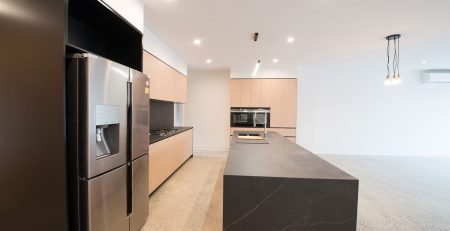
Open-plan warehouse living means your kitchen needs to play nicely with the dining and living zones. Without traditional walls marking boundaries, you’re zoning the space through large island benches, floor material changes, and variations in ceiling height. This openness reflects how most of us actually live and work these days, keeping everyone connected even during everyday routines.
Structural Challenges in Cremorne Warehouse Kitchen Renovations
Renovating inside an existing industrial building throws up challenges you won’t get in modern builds. Many Cremorne warehouses come with immovable structural elements like load-bearing steel beams, concrete pillars, complex ceiling bulkheads hiding historical plumbing and electrical. These headaches can actually be design opportunities.
Exposed steel beams are absolutely quintessential to the warehouse vibe, but they’ve got to meet strict fire safety standards. Structural posts have a habit of popping up in the most inconvenient spots. The sophisticated move is to integrate these columns right into your island or wet bar. You can wrap a support post in matching timber veneer so it coordinates with your cabinetry, or build an island that anchors to the post and uses it to house electrical services for benchtop power points. Suddenly, that obstacle becomes a distinctive architectural feature.
High-end cabinetry for industrial kitchen spaces
Working Around Steel Beams and Concrete Columns
In a warehouse kitchen, your cabinetry quality makes or breaks the whole design. Modern European-style cabinetry maximises storage while delivering those clean, handleless lines that are essential for the minimalist industrial look. Because Cremorne warehouses often come with non-standard ceiling heights and walls that aren’t quite square, custom fabrication ensures your cabinetry feels like it was always meant to be there.
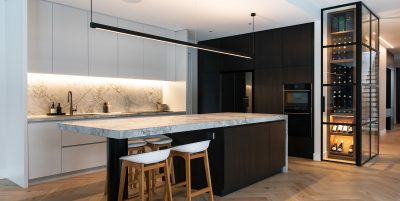
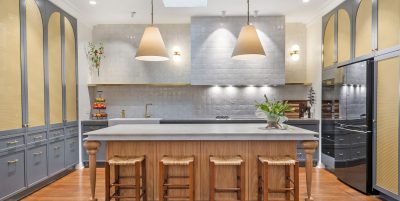
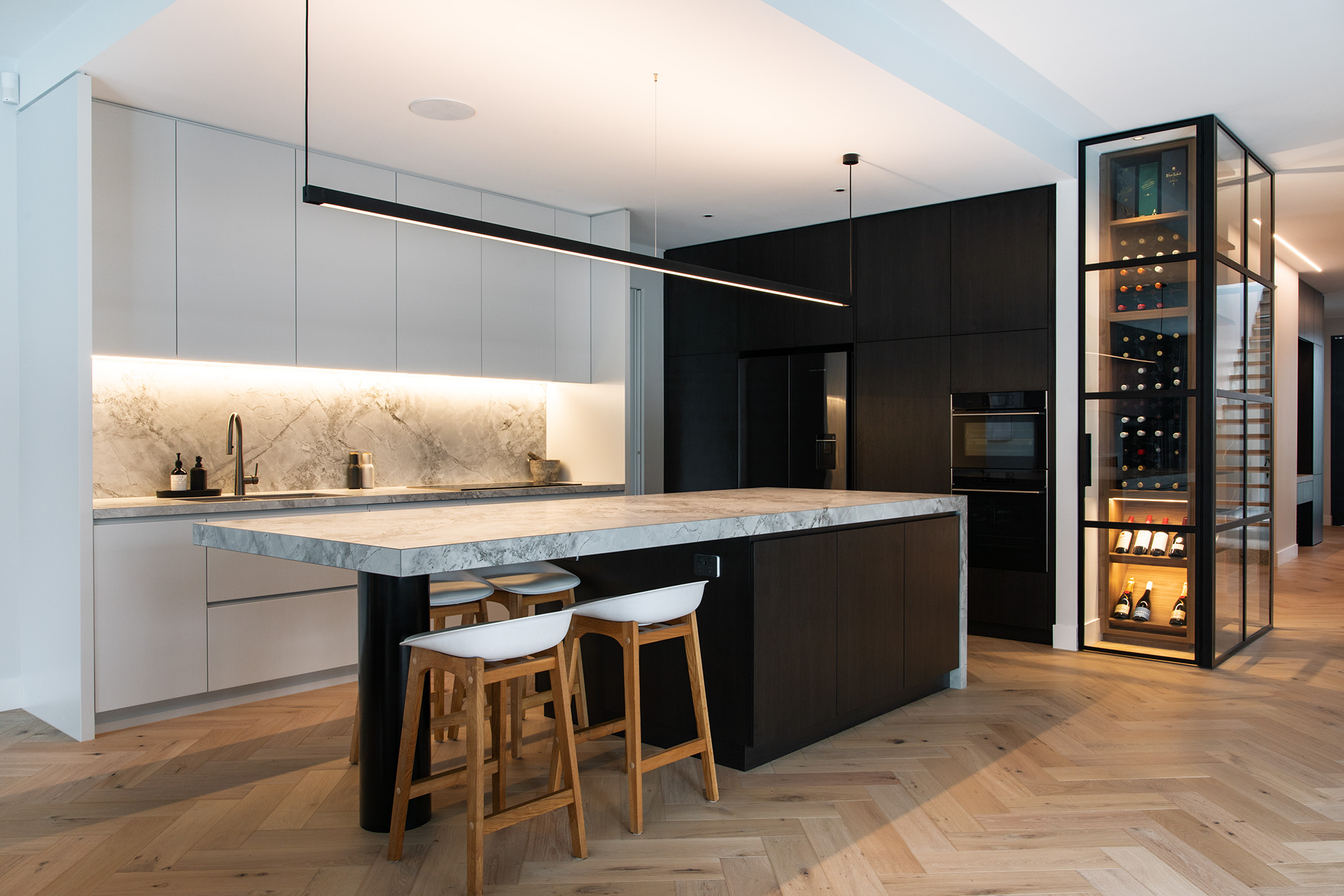
The colour palette tends toward moody, neutral tones that complement all that brick and steel. Matte black is hugely popular, but an all-black kitchen can feel a bit oppressive if you’re not careful. We like to break up those dark surfaces with textured elements like reeded timber, timberprint melamines, or warm wood veneers. This brings some natural warmth into what might otherwise feel too industrial.
Two-pack painted finishes give you the durability and precision you need in a professional-grade kitchen. And if you’re after that ultra-rugged look, galvanised steel elements or metal mesh door fronts can really drive home the building’s manufacturing heritage while staying contemporary.
Your benchtops need to work as hard as they look good
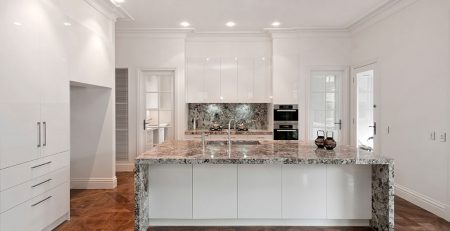
Caesarstone® Icon Advanced Mineral surfaces, particularly in finishes like ‘Raw Concrete,’ gives you that industrial concrete look without the maintenance hassles and weight of actual poured slabs. For something a bit more luxe, honed granite or marble adds natural character and can handle extreme heat without breaking a sweat.
Porcelain slabs have really come into their own as high-performance alternatives. They offer ultra-thin, sleek profiles that laugh in the face of stains, scratches, and heat. You can use these for countertops, integrated backsplashes, and waterfall island ends, creating that monolithic look that’s incredibly desirable in warehouse designs. And if you want an authentic commercial look, stainless steel develops a characterful patina over time while staying hygienic and tough as nails.
Integrating smart storage solutions
High ceilings and generous floor space can actually lead to wasted storage if you’re not careful with planning. The solution lies in clever internal hardware that gets rid of dead zones. Pull-out drawer systems let you see everything at once, and soft-close mechanisms mean even wide, heavy drawers glide open with barely a touch.
Clutter is the sworn enemy of minimalist aesthetics. Appliance cupboards with bi-fold doors or pull-out shelves let you use your coffee machine, blender, and toaster, then tuck them away out of sight. Integrated bin drawers with separate sections for recycling and composting keep your floors clear and waste hidden.
With those towering ceilings, you can run cabinets right up to the roof. The highest shelves are for things you only use occasionally, but they provide seriously valuable storage in these compact inner-city homes. You can even personalise the ergonomics by setting your island bench height to suit whoever does most of the cooking, while integrated seating sits at just the right level for guests.
Lighting an industrial space
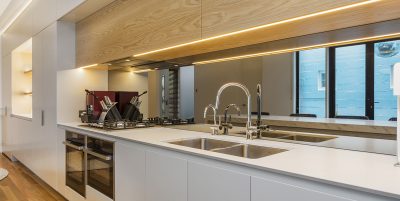
Lighting in a warehouse kitchen needs to do two jobs: keep things functional and create atmosphere. Those high volumes mean you can’t rely on a single light source, so you need a layered approach that works for cooking prep and entertaining.